

Dental Implant FAQs: Your Questions Answered
If you are considering dental implants, you likely have questions about whether you may be a candidate, what treatment involves, what recovery may be like, and how much it could cost. The answers below will help you understand the basics and prepare for a conversation about your tooth-replacement options.
Dr. Mohammad Yousefi provides comprehensive dental implant care at Cedar Tree Dental in Victoria, including implant placement, related extractions and the final restoration. Because every patient’s oral health and treatment needs are different, the information on this page is general and does not replace a clinical assessment.
Looking for information about treatment at our clinic? Explore Dental Implants at Cedar Tree Dental.
Dental Implant Basics
What is a dental implant?
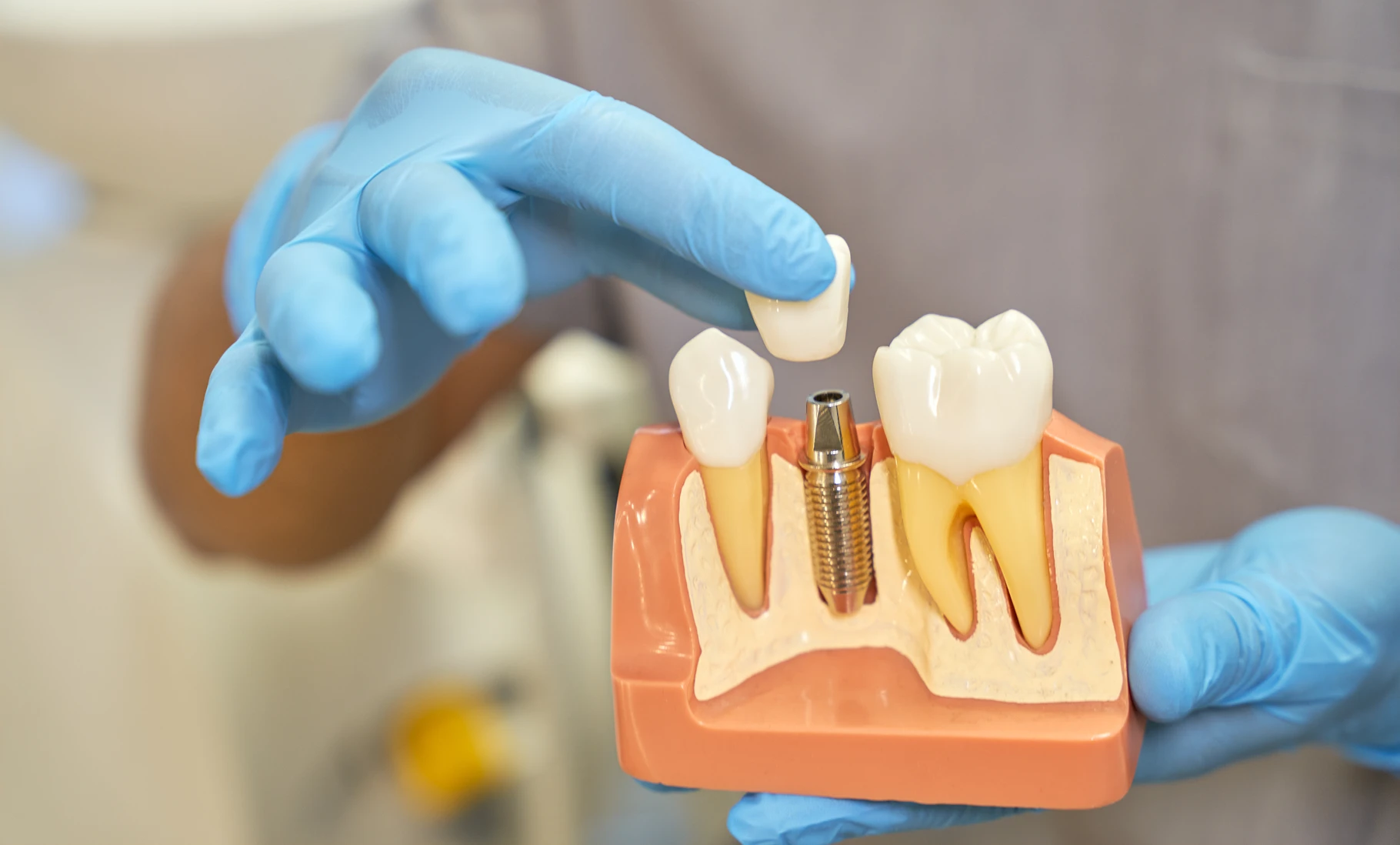
A dental implant is a titanium post placed in the jawbone to replace the root of a missing tooth. After healing, it can support a crown, bridge, denture, or full-arch restoration.
How do dental implants work?
mplant treatment takes place in stages. The implant is placed in the jawbone and given time to heal. Once the area is ready, a restoration is connected to the implant.
The restoration may be a crown for one missing tooth, an implant-supported bridge for several teeth, or a denture or full-arch restoration for more extensive tooth loss. The exact stages and timeline depend on the condition of the treatment area and the care required.
What are dental implants made of?
Dental implants are typically made from titanium or a titanium alloy. These materials are commonly used because of their strength and ability to integrate with bone.
Dr. Yousefi can explain the implant system recommended for your treatment and answer questions about its materials or design during your consultation.
What is the difference between an implant and a crown?
The implant is the portion placed below the gums in the jawbone. The crown is the visible replacement tooth attached to the implant after healing.
These are separate parts of treatment. When discussing cost or timing, it is helpful to confirm whether an estimate includes both implant placement and the final crown.
Why might a missing tooth need to be replaced?
Depending on the location of the missing tooth and the condition of the rest of your mouth, nearby teeth may shift, the way your teeth meet may change, and the bone in the area may gradually change over time.
Not every gap requires the same solution. An implant, traditional bridge or removable option may be considered based on your oral health, goals and the location of the missing tooth.
Candidacy, Gum Health and Bone Health
Dental implants may be considered for people who are missing one or more teeth, have a tooth that cannot be predictably restored, want greater stability for a denture, or need more extensive tooth replacement.
Important considerations include:
- Gum and bone health
- Medical and dental history
- Medications and health conditions
- Smoking or nicotine use
- Oral hygiene
- The location and number of missing teeth
- Treatment goals and expectations
Some patients can proceed directly to implant placement. Others may need preparatory care first.
Am I too old for dental implants?
Age alone does not usually determine whether someone is a candidate. Overall health, oral health, medications, healing ability, gum condition and available bone are generally more important considerations.
An assessment is the most reliable way to determine whether implant treatment may be suitable for an older adult.
Can I get dental implants if I have bone loss?
Bone loss does not automatically rule out implant treatment. The amount and condition of bone in the treatment area must be assessed before a recommendation can be made.
Depending on the findings, bone grafting, a sinus lift or another approach may be recommended before or during implant placement.
What is bone grafting for dental implants?
one grafting is used to rebuild or add volume to an area of the jaw where additional support may be needed for implant treatment.
Dr. Yousefi [hyperlink to his bio] has completed advanced continuing education in implant placement, bone grafting and sinus lift procedures. He provides bone grafting, sinus lifts and extraction-site augmentation at Cedar Tree Dental when clinically appropriate.
Does everyone need a bone graft before getting an implant?
No. A bone graft is recommended only when the assessment shows that additional bone is needed in the treatment area. Many implant patients do not require grafting.
How do you determine whether I have enough bone for an implant?
Assessment begins with a clinical examination and dental X-rays. In some cases, a three-dimensional image is required to evaluate the jawbone and surrounding anatomy in greater detail.
Cedar Tree Dental has an in-office 3D CT scanner, allowing this imaging to be completed at the clinic when needed.
Can I get dental implants if I have gum disease?
Healthy gums and supporting bone are important for implant treatment. If active gum disease is present, it may need to be addressed before an implant is placed.
Your dentist will assess your gum health and explain whether periodontal care or changes to your home-care routine are recommended before proceeding.
Can I get dental implants if I smoke?
Smoking and nicotine use can affect healing and may increase the risk of complications. This does not necessarily mean every person who smokes is ineligible, but it is an important part of treatment planning.
Be open with your dentist about smoking, vaping or other nicotine use so the potential risks and recommendations can be discussed clearly.
Consultation and Treatment
our complimentary consultation includes a review of your medical and dental history, a clinical examination, appropriate standard X-rays, and a discussion with Dr. Yousefi about your concerns and goals.
Dr. Yousefi can explain:
- Which options may be suitable
- The treatment stages involved
- The anticipated timeline
- Whether preparatory care may be required
- Estimated treatment costs
- What you can expect if you decide to proceed
If a 3D CT scan is required for assessment or planning, it is not included in the complimentary consultation and is charged separately.
Do I need a CT scan before getting a dental implant?
Not every patient needs one. A 3D CT scan may be recommended when a detailed view of the jawbone, nerves, sinuses or treatment area is needed for planning.
Standard consultation X-rays are included in the complimentary consultation. A CT scan, if required, is a separate cost.
Who places dental implants at Cedar Tree Dental?
Dr. Mohammad Yousefi personally places dental implants at Cedar Tree Dental and completes the restorative care that follows. He has practiced dentistry since 1993 and has focused on implant treatment since 2008.
Does Dr. Yousefi complete the final restoration too?
Yes. Dr. Yousefi provides both implant placement and the restorative stage of care. For many patients, this means the same dentist can plan treatment, place the implant, monitor healing and complete the final crown, bridge, denture or full-arch restoration.
Some cases may benefit from collaboration with another dental specialist. If a referral is recommended, Dr. Yousefi will explain why and help coordinate the next steps.
Can Dr. Yousefi remove a tooth before implant treatment?
Yes. Dr. Yousefi performs extractions related to implant treatment when clinically appropriate. Whether an implant can be placed immediately or the area should heal first depends on the condition of the tooth and treatment site.
Can an implant be placed immediately after an extraction?
Sometimes. Immediate placement may be considered when the treatment area has suitable bone and the clinical conditions support it. In other situations, the area needs time to heal or requires grafting before implant placement.
Dr. Yousefi will assess the area and explain the recommended sequence of treatment.
How long does the dental implant process take?
The timeline varies. Treatment may take longer when an extraction, bone graft, sinus lift or extended healing period is required. The number of implants and the type of final restoration also affect the process.
After assessing your mouth and reviewing any required imaging, Dr. Yousefi can provide a more specific anticipated timeline.
Will I be without a tooth while the implant heals?
Temporary tooth options may be available while an implant heals, but they are not suitable for every treatment area or situation. The recommendation depends on the location of the missing tooth, the stability of the area and the overall treatment plan.
If appearance or function during healing is a concern, discuss it with Dr. Yousefi during your consultation.
Is sedation available for dental implant treatment?
Yes. Cedar Tree Dental offers oral sedation for patients who feel anxious or would like additional support staying comfortable during dental implant treatment.
Oral sedation involves taking prescribed medication before the procedure to help you feel more relaxed. It does not usually make you fully unconscious, and you will need a responsible adult to drive you to and from the appointment.
Sedation is not necessary or suitable for every patient. Dr. Yousefi will review your medical history, medications and treatment plan before determining whether oral sedation may be appropriate for you.
Recovery and Healing
Does getting a dental implant hurt?
Local anesthetic is used during implant placement to numb the treatment area. Experiences vary, and some soreness, tenderness or swelling may occur afterward.
Dr. Yousefi will explain the comfort options available during treatment and provide aftercare instructions based on your procedure.
What is recovery like after implant placement?
Recovery depends on the number and location of implants, whether an extraction or graft was completed at the same time, and how your body heals.
Tenderness or swelling may occur during the initial recovery period. Follow the instructions provided by the clinic and contact the dental team if you experience symptoms that concern you or do not improve as expected.
What can I eat after implant placement?
Your food recommendations will depend on the procedure performed. Patients may initially be advised to choose softer foods and avoid chewing directly on the treatment area.
Follow the instructions provided after your appointment, as they will be tailored to your treatment.
Where to find us?
- Mon: 8:30 am - 4:30 pm
- Tue: 7:30 am - 4:30 pm
- Wed: 8:30 am - 4:30 pm
- Thu: 8:30 am - 6:00 pm
- Fri: 8:30 am - 4:00 pm
- Sat: 8:30 am - 4:30 pm (once per month)
- Sun: Closed